RPGs
On the Taxonomy of Spaceships
Yup, spaceships again. Between Star Citizen, the new Halo, the new Star Wars, a couple of key mods for Sins of a Solar Empire that I keep up with and […]
 The Arcane Athenæum
A collection of homebrew material for 5e Dungeons and Dragons
Yup, spaceships again. Between Star Citizen, the new Halo, the new Star Wars, a couple of key mods for Sins of a Solar Empire that I keep up with and […]
Yup, spaceships again. Between Star Citizen, the new Halo, the new Star Wars, a couple of key mods for Sins of a Solar Empire that I keep up with and have done some voice work on, and Destiny, my mind has been buzzing with them. I’m a huge nerd who thinks of things in my free time like “if I were a shinigami what kind of Zanpakutō would I have?” and “I wonder if I’d rather be a ranger or a mage” and “if I were a Jedi in the New Jedi Order, what kind of ship would I have?” And alongside that sort of inane theorycrafting and imagination comes obvious questions, like “would I want to captain a cruiser or a carrier?” But then, what exactly is the difference?

There are lots of different ship classes in science fiction, and I’m not talking about the designated name for a particular frame (like Victory-class or Firefly-class). I’m talking about classification of ship roles; or ship types. You have your cruisers, your destroyers, your frigates and corvettes, your dreadnoughts, and all sorts of other roles. But something that always confused me is exactly what the differences are between them. If you had shown me two ships and claimed one was a destroyer and one was a cruiser I wouldn’t have really understood what that actually means and what roles they employ in a battle. How is a battleship different from a battlecruiser? Is there any difference between a star cruiser and an assault cruiser, and if so what is it?
So like any good geek I did research and actually enjoyed doing it! And the knowledge I’ve gained I want to spread for anyone who is interested, whether that be due to simple curiosity or you’re developing a story or RPG setting. Because knowledge is power.
Before we get to the meat of the topic let’s look at a bit of history. When science fiction writers were exploring space they drew a natural comparison between space travel and the maritime Age of Sail; both feature long voyages on large vessels through “alien” terrain that human beings can’t freely traverse. As such, naval terminology entered the lexicon very quickly, and as a result spaceships are classified by similar naval systems. That’s also likely the reason why the branch of the military that deals with spaceships in fiction is very commonly called the Navy.
Naval warfare, particularly way-back-when in the 17th Century or so, was rather stringent and refined. The British in particular had very strict guidelines on ship classification, roles, and tactics. As time went on the definitions for particular warships and roles blurred until we hit modern day navies. Back in the day, like 17th Century back, a common tactic was the naval “Line-of-Battle,” introduced by the Portuguese in the 15th Century. The idea is that your fleet would very literally line up in a single-file row and turn their broadsides toward the enemy. This gave all ships within the line free sight to fire on the enemy fleet without fear of hitting an ally. Battles could play out with enemy fleets sailing parallel to each other and firing into one another, though the ideal situation had your line slicing perpendicularly through the enemy’s line at some point. Ships that could survive standing within the line were thus referred to as “ships of the line (of battle)” or “line-of-battle ships.” Other ships existed that were not ships of the line, and they usually had other tactics to employ and jobs to fulfill. (This is important information for later; I promise.)

Let me touch a bit on capital ships and flagships. William S. Lind explains the concept of a capital ship extremely well; “These characteristics define a capital ship: if the capital ships are beaten, the navy is beaten. But if the rest of the navy is beaten, the capital ships can still operate. Another characteristic that defines capital ships is that their main opponent is each other.” In short, a capital ship is a ship that doesn’t need the rest of the fleet to function, and can operate independently of a fleet while being the main target of other capital ships (not that they are impervious to the fire of other ships, but that generally capital ships will seek each other out for direct confrontation). Note that this definition refers strictly to independence in a large-scale engagement. Plenty of other vessels can operate independently in other scenarios, such as patrol, but in a large-scale battle they would not be able to combat the enemy fleet if the capital ships fell. Capital ships are generally some of the largest and most heavily armored ships in a fleet. However, they should not be confused with flagships. A fleet can have multiple capital ships within it; the term simply describes the capabilities of a particular vessel. But an individual fleet will only ever have one flagship at a time, the “lead” ship, which the admiral/general/fleet commander resides on and operates from. Flagships are often capital ships (as they generally want to be the biggest, most powerful ship in the fleet), but by definition whichever ship has the fleet commander on board will fly the flag and thus be considered the flagship. Usually, this is a specifically designated vessel but the title can jump around as needed between ships.
So, from here on out I’ll be explaining the various classes of ships, their histories, and how I would personally define what the role a spaceship of that kind would take. I’ll also provide specific examples of each ship type as I go. A word of warning, though; even in the real world rules are and were constantly being broken. Ships technically designed as one type of vessel may perform the operations of another type equally well, or some countries may have different rules from each other and thus classify two vessels of almost identical capability differently. Not only that, but as technology improves the various types can become so alike that it can be very difficult to draw a line. A further problem (which comes up very often in sci-fi) is technological superiority; that is, a ship classification in one species’ navy may not be equal to the ships of the same classification in another species’ navy. For example, one navy’s corvette may be large enough and powerful enough to be more than a match for another species’ destroyer or cruiser. What’s important when we talk about ship classification is the comparison of ships within the same navy. So while that corvette may be a cruiser as far as the alien race is concerned, what’s important is that the species that built it considers it a corvette.
Just remember that this guide exists as just that; a guide. It is not a strict law, the rules of which can never be broken. Feel free to break these rules if it makes sense for you to do so.
Let’s go from the smallest ships to the relative largest. For each type I’ve bolded particular characteristics that stand out to me and help cement the ship’s role. I’m just going to be going over warships, so things like freighters or single-pilot ships will not be getting the once-over.
Corvette
The word “corvette” comes from the Dutch word corf, which means “small ship,” and indeed corvettes are historically the smallest type of rated warship (a rating system used by the British Royal Navy in the sailing age, basically referring to the amount of men/guns on the vessel and its relative size; corvettes were of the sixth and smallest rate). In complete honesty I have not found much information on what role corvettes tended to employ; or at least nothing extremely concrete. By all rights, early corvettes are essentially just smaller, less effective frigates; they were more lightly armored and armed than frigates, while not being as quick or maneuverable. They were usually used for escorting convoys and patrolling waters, especially in places where larger ships would be unnecessary. Corvettes could also be used for taking out larger vessels already crippled by other ships, almost making them akin to scavengers. Later corvettes in modern navies (around WWII) started filling a niche as antisubmariners, minesweepers, and trawlers (it might be more accurate to say that those kinds of vessels started being called corvettes, but the effect is the same). In many ways, corvettes existed just to have a ship or two (or ten) available; being smaller and more lightly armed meant that they were cheaper to construct, and that is important when discussing anything in history. It takes money and resources to build things, so you can’t just build a bunch of the best thing.
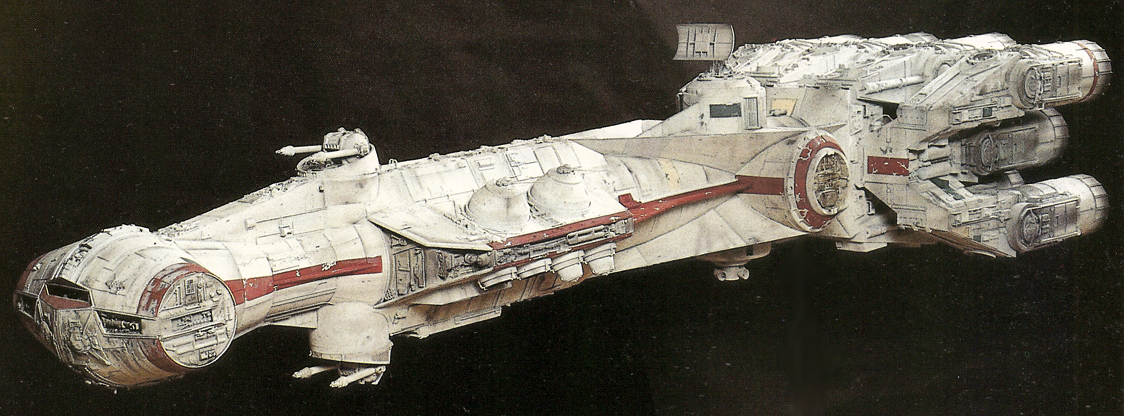
In Sci-Fi – Corvettes would be the smallest warships, designed for escort and patrol, anti-mine, or anti-stealth. They would be used where larger ships with more firepower are not deemed necessary (such as backwater worlds or low-risk areas) or where a larger ship would be unsuitable for deployment. Corvettes might be outfitted to have some sort of stealth or cloaking system for reconnaissance or spec ops missions; naturally it would be easier to cloak a smaller ship than a larger one (though plenty of examples of large stealth ships exist). In some series they are likely to be diplomatic vessels due to their small size and speed, particularly seen in Star Wars, and can commonly act as blockade runners (again; their small size and speed makes them ideal for slipping through a blockade, where a larger ship presents more of a target). They would, ideally, never be used for direct combat in large scale engagements due to their extremely light armor and weapons, but may be employed in a battle to lay down or destroy minefields, uncover stealth ships, act as stealth ships on their own (for whatever purpose needed), or for dispatching already crippled vessels.

Frigate
“Frigate-built” was a term used in the 17th Century describing a warship that was built to be quick and maneuverable. They were often too small to stand in the “line of battle” and usually had only one weapons deck (but sometimes two). By the 18th Century the term had been modified slightly to include ships that may be as long as a ship of the line but were still designed for speed and had lighter weaponry, making them useful for patrols and escorts. The 19th Century brought armored frigates to the world, which were actually regarded as being the most powerful warships at the time. They were still known as frigates because they were lightly armed with only one deck of guns. Modern frigates are generally used as escorts for other warships and convoys. As I mentioned earlier, frigates and corvettes really are very similar in their designs and roles; frigates just tend to be larger (and thus more expensive to build) and had more firepower, so they could engage in direct combat more effectively.

In Sci-Fi – Based on their history, space frigates would probably be best defined as smaller vessels with light armament and armor (but more powerful and larger than a corvette), suited for speed and maneuverability. They’d often act as patrol and escort vessels, whether for a merchant convoy, a single capital ship, or a fleet. Their agility and maneuverability means they can move to redeploy and protect other ships better than larger, slower moving vessels. You’d likely see a strength-in-numbers strategy with them. Frigates, unlike corvettes, would more commonly see direct battle and would probably not be found with stealth drives in most settings; they are simply getting too large by that point.

Destroyer
Destroyers are comparatively modern ships. Historically, they were designed after the emergence of torpedo boats (quick, frigate-like ships which employed newly invented self-propelled torpedoes as their main arms) in the late 1800s. Torpedo boats were faster and more maneuverable than larger ships, able to bear down on a battlecruiser and take it out with its torpedoes. Destroyers were originally designed as, and named, torpedo boat destroyers, but at some point became referred to simply as destroyers when their roles expanded. They went through many iterations, but were essentially smaller cruisers designed with the sole purpose of hunting down and destroying torpedo boats, and had much more powerful weaponry as well as torpedoes to fulfill this purpose. As such, they were employed as escorts for larger, slower warships (to protect those warships from torpedo boats). They were designed to have the long range and speed to keep up with their fleet, and over time this fact plus their multi-purpose capabilities meant that destroyers began seeing more use as advanced scouts for a fleet as well as direct fleet combatants, anti-submariners, and anti-submarine patrol. Destroyers operated in destroyer divisions or units composed of multiple destroyers in order to carry out these tasks. By WWII destroyers began filling in a niche as (what I’ll very simply call) anti-everything vessels, extremely powerful high-value targets due to the number of guns they would field. In fact, this pushed several countries to develop smaller corvettes and frigates as anti-submariners in order to take some of the heat off of destroyers.
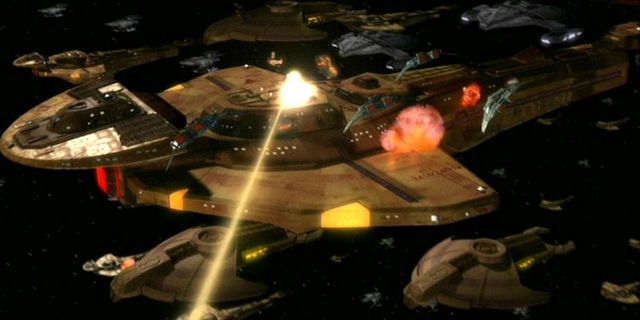
In Sci-Fi – Destroyers would be much like their naval counterparts; ships smaller than cruisers (and usually larger than frigates, though not always) but armed to the teeth with a multitude of weapons. They’d mostly act as escorts for larger fleets (and likely not for single warships, but exceptions would certainly exist) but can be seen operating in destroyer-only divisions as well. You could expect to find destroyers fulfilling all sorts of roles because of how multi-purpose they are, even roles that could be fulfilled by other types that are designed for that purpose. It would, however, be rare to find a destroyer acting on its own in most circumstances; destroyers are not capital ships and do not operate as patrol craft. They do not operate independently as a rule, though I know of at least one case in fiction where a super-destroyer acted as an independent ship. Science fiction, as I mentioned previously, breaks a lot of rules.
Cruiser
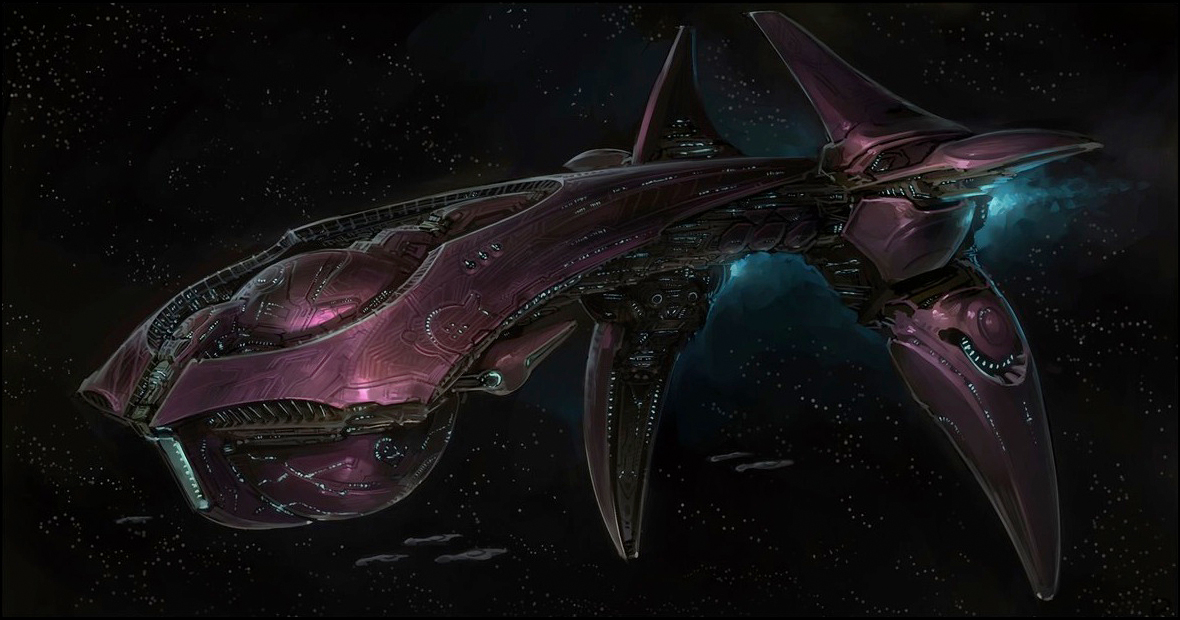
In the Age of Sail “cruiser” was a term used to describe ships which underwent “cruising missions;” that is independent scouting, raiding, and commerce protection missions. These “cruiser warships” were normally frigates and sloops because there simply wasn’t anything else available at the time. By the mid 1800s ships began being constructed that were specifically designed for this sort of work, and as such were called “cruisers”. They could be smaller, like a frigate, or larger, but it was not until the 20th Century that they were consistently scaled to be larger than a destroyer but smaller than a battleship.
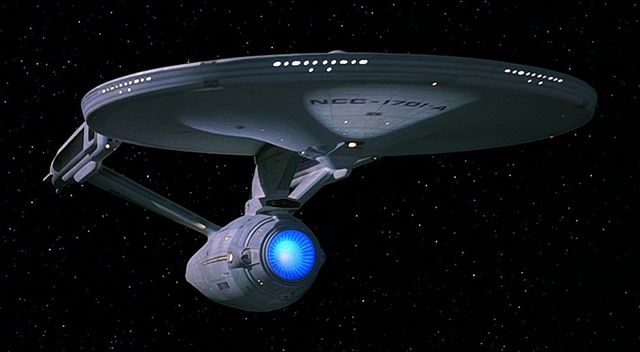
Cruiser roles in the late 20th Century included anti-air defense, shore bombing, and commerce raiding, depending on the navy. However, the increasing firepower of aircraft made it so that individual cruisers could no longer operate safely, pushing navies to have their cruisers operate in fleets. Because of this, cruiser fleets were also specialized for particular roles (like anti-submarine or anti-air) and the generalized cruiser fell out of use.
In Sci-Fi – Cruisers are medium-sized vessels, able to operate independently but also commonly seen within a fleet. They would have the capacity to be used as anti-fighters, planetary bombers, raiders of enemy supply lines, and scouts. However, they would also be the type of ship most likely to engage in non-combat roles such as exploration or even colonization due to their ability to operate independently for extended periods. I would not expect cruisers to commonly be used in front-line assaults of an enemy fleet; that role is better left to other ships. However, they have the firepower, size, and better defensive capability to go up against other ships when needed and it’s not uncommon to see cruisers making up the bulk of fleets in some settings. It is however, in my admittedly amateur opinion, not the ideal choice; better to fill in that space with destroyers or battlecruisers and battleships. Cruisers can be considered capital ships in some settings (and in fact, some settings treat any ship over a certain size as a capital ship, regardless of role).
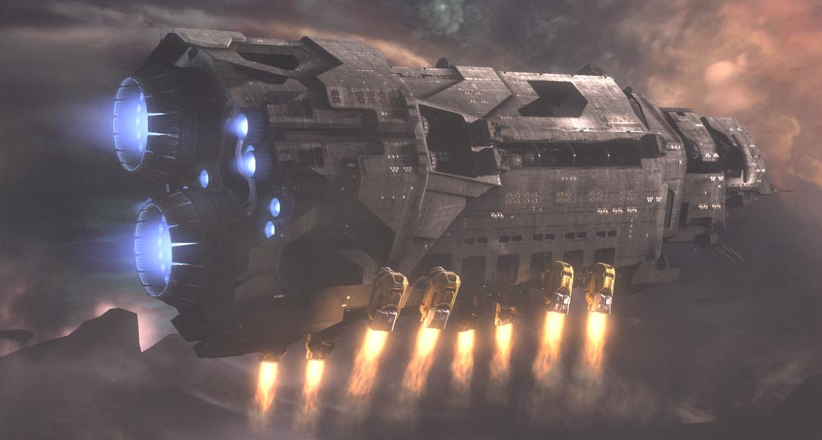
Battlecruiser and Battleship
Battlecruisers (or battle cruisers) are the first vessels in this article to commonly be considered capital ships. They are similar to battleships, having a similar armament and size, but were generally faster and not as heavily armored by comparison. Originally fielded by the UK in the early 20th Century, battlecruisers were designed to combat and destroyer slower, older armored cruisers through heavy gunfire. As time went on (around WWI) they began seeing use as general-purpose ships alongside battleships by all manner of countries. Unfortunately, battlecruisers were generally inferior to battleships, and in the Battle of Jutland this was perfectly exemplified as both navies lost battlecruisers but no battleships; the light armor of the battlecruisers made them easier targets for heavy guns. As technology improved battlecruisers were designed with heavier armor. At the same time, battleships began becoming faster. These similarities would ultimately cause a blurring between the two types, and by 1922 the Washington Naval Treaty considered battlecruisers and battleships functionally identical. The Royal Navy continued to refer to pre-treaty battlecruisers as such, and WWII saw a re-emergence of modernized “cruiser-killer” battlecruisers. However, only one such vessel actually survived the war, cementing again their general inferiority to battleships.

The term “battleship” is a contraction of phrase “line-of-battle ship” from the Age of Sails. If you remember, ships of the line were the largest and most powerful ships that a navy could field and were strong enough to stand within the line of battle. Modern battleships arose from ironclad battleships in the late 19th Century, and battleships were for decades considered the most powerful type of naval warship. They were characterized by very heavy armor and large-caliber guns, making them key capital ships. So influential were they that treaties such as the Washington Naval Treaty were designed, partially, to limit the number of battleships that a particular country could have. They represented naval might and power, and battleships were so influential in their strength that the simple existence or presence of a fleet, even without leaving port, could create psychological victories for a navy (called a fleet in being). Battleship tactics often saw other vessels, such as destroyers or cruisers, employing scouting and raiding missions in order to locate enemy fleets before the battleships came in to sweep aside the enemy. Despite these strengths, battleships were susceptible to smaller weapons such as torpedoes, mines, and aircraft missiles (and thus required the presence of smaller escort ships such as frigates and destroyers to protect them; it’s all circular). If your battleships fell the fleet would fall, as is the accepted definition of a capital ship. Presently there are no battleships currently in service anywhere in the world.
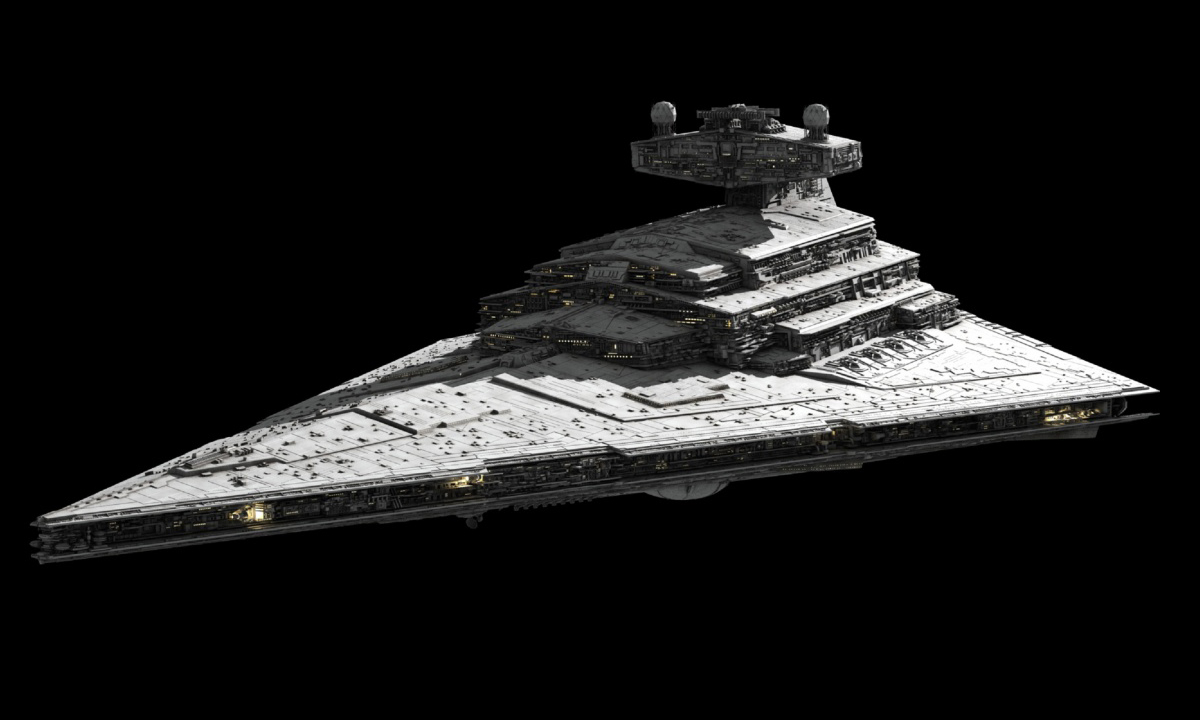
In Sci-Fi – Despite their unfortunate history, battlecruisers in space tend to operate similarly to battleships, and I would argue there is not much distinction between the two owing, partly, to the blurring of both vessels in our history. Battlecruisers and battleships, thus, often act as the heavy hitters in a fleet; they are the main combatants and are protected by other vessels such as frigates and destroyers. Being that they are capital ships, an engagement is usually won through battlecruisers and battleships. If a distinction is made between the two types then battlecruisers would likely be quicker and less heavily armored than battleships, and in some settings are not even considered capital ships at all. But again; rules can be blurry and broken at the whim of any author. Regardless, battlecruisers and battleships are the truly massive, anti-“large vessel” ships in a fleet. They are meant to take a lot of punishment and dish out that punishment in kind. One particular term I see fairly often is “star cruiser.” In my mind, a star cruiser could either be the equivalent of a cruiser or a battlecruiser; that distinction is likely decided by whether or not star cruisers are considered capital ships, since that then determines the general capabilities of those vessels. As a general rule I would be bold enough to claim that star cruisers are equivalent to battlecruisers, and named as such because space.

Carrier
Aircraft carriers, like destroyers, are very modern classifications. They are the one vessel in today’s navies that almost anyone can pick out at a glance without fear of mistaking them for something else. This is due to their extremely obvious design; a very large, flat deck suitable for landing and deploying aircraft. Put as simply as possible, carriers carry aircraft (whether plane or helicopter depends on the ship). Historically, the concept of utilizing seagoing vessels for airborne operations was considered as far back as the early 1800s (though with balloons rather than planes). It was not until the early 1900s, with the invention of seaplanes, that actual aircraft launched from a ship become prominent. Back then, an aircraft with floats was launched from a modified cruiser or capital ship with a catapult, then recovered by a crane after it would later land in the water. Semi-successful uses of ship-borne craft in 1914 showed the world how effective such assets could be in war, and heavier-than-air craft started becoming more valuable for the world’s navies. By 1922, with the Washington Naval Treaty, battleships and battlecruisers (which most navies had too many of to be legal under the new treaty) were being converted into carriers. The flat-topped design did not become prominent until the late 1920s.
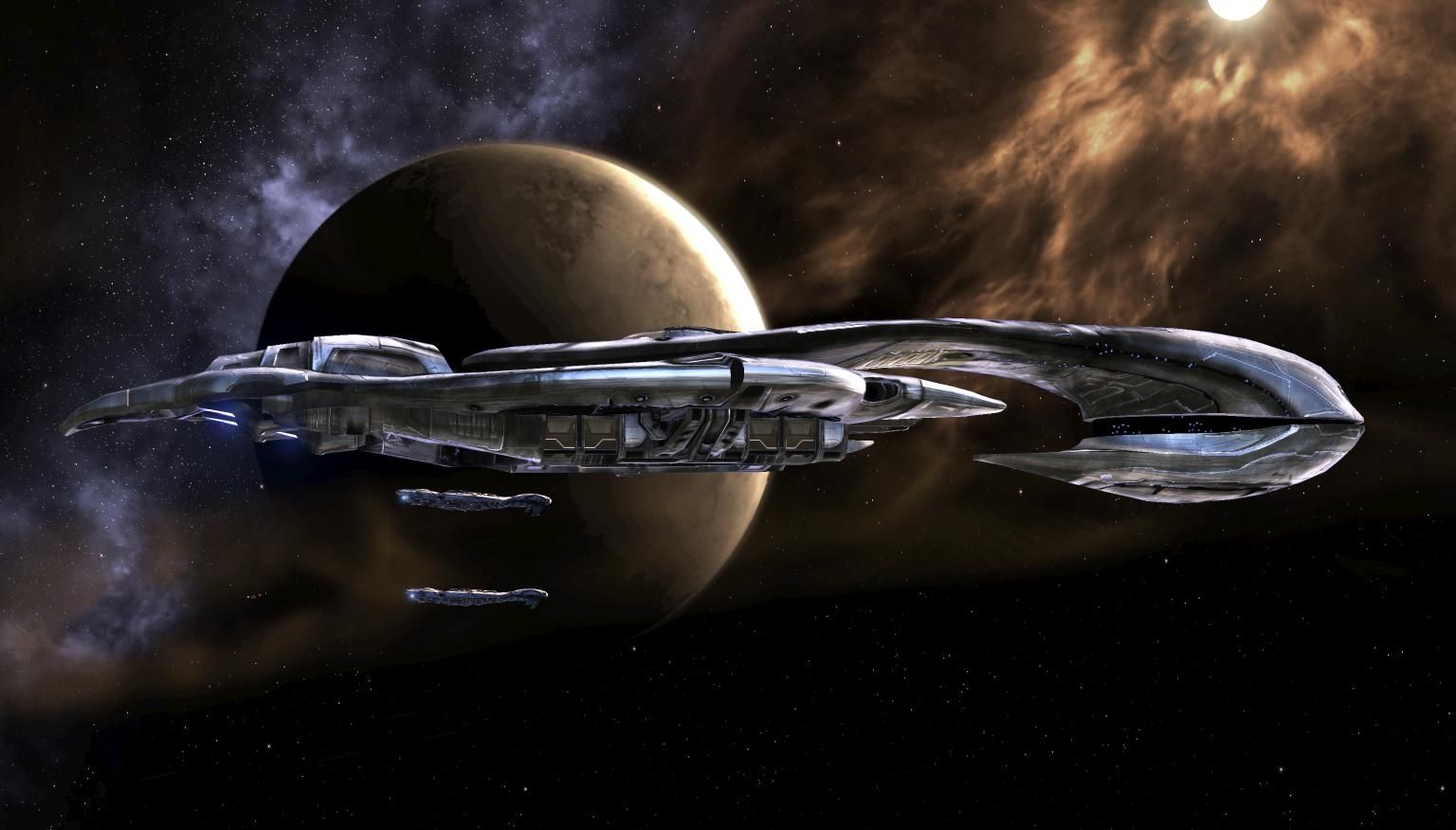
No one can deny the value of single-fighter aircraft. Planes provide a new dimension from which to attack and defend, and can carry payloads ranging from missiles to bombs to supplies for ground troops. Aircraft were extremely effective compared to even the best guns as they were more accurate and had the benefit of extreme maneuverability. That said, carriers suffered from a lack of personal offensive and defensive ability, and relied on their aircraft or the rest of their fleet to protect them. Even so, their aircraft can be considered an extension of themselves and the reign of the battleship was brought to a close when U.S. ship-borne craft sunk numerous Japanese super battleships, the largest battleships ever made.
In Sci-Fi – Carriers tend to be some of the largest capital ships around due to the need to hold and transport large numbers of fighters, bombers, and other craft. Typically, though not always, their hull-mounted armaments are light; carriers usually rely on the large numbers of fighters they carry (when operating solo) or their fleet for defense and attack of other ships. The ability to carry craft does not make a ship a carrier by default; many frigates and cruisers, for example, will carry a complement of fighters or a few ground vehicles. In order to be considered a true carrier the vessel’s main role needs to be the transport and deployment of smaller craft (or troops; as far as I’m concerned not all carriers are extremely large and I would classify troopships and assault ships as small carriers).
Dreadnought
It’s difficult to talk about historical dreadnoughts without also talking about battleships. The first dreadnought was the Royal Navy’s HMS Dreadnought, a large and heavily armored battleship that ran on steam turbines (and thus made her the fastest battleship at the time). Dreadnought operated on an “all-big-guns” philosophy, giving her more heavy-caliber guns than any other ship at the time instead of smaller, quicker-to-fire secondary guns. Her creation was extremely influential in her time, and she spawned a new variant of battleship called “dreadnoughts” (and battleships made before her were designated “pre-dreadnoughts”). Thus, strictly speaking, dreadnoughts are just particularly large and powerful battleships. As such they carry the same characteristics of battleships; they are capital ships, represent naval power and influence, and would need a fleet to protect them from smaller vessels and weaponry.
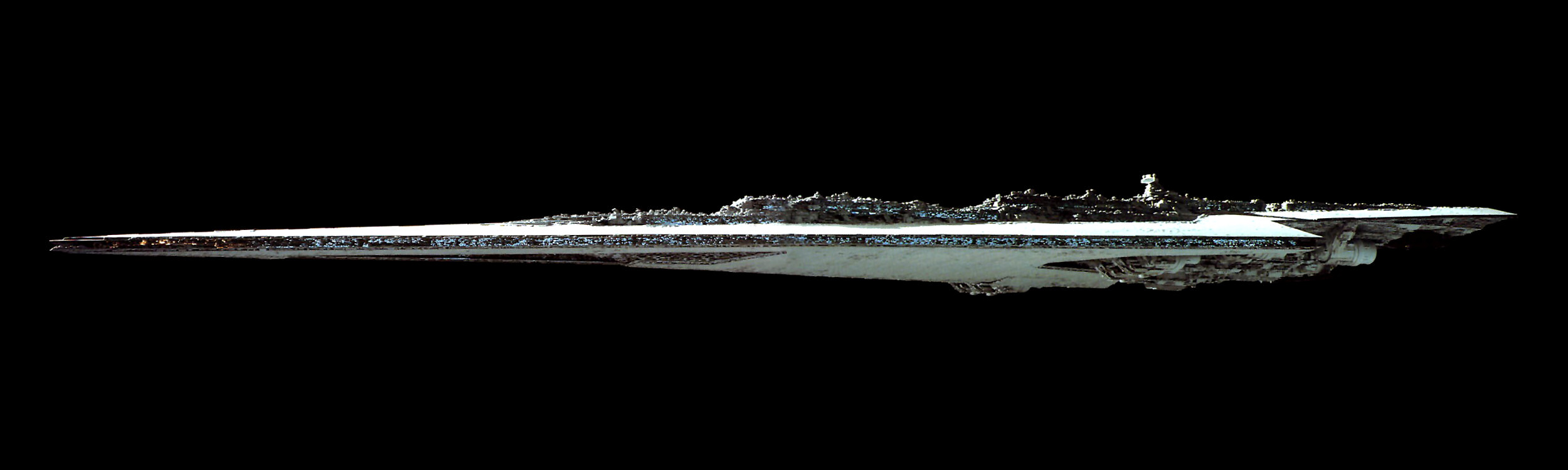
In Sci-Fi – Dreadnoughts are just about always gigantic ships; massive vessels that dwarf even the largest battleships or battlecruisers. The role they fulfill is exactly like a battleship or battlecruiser; complete dominance and superiority. Intimidation, even more so than with battleships, is the name of the game when it comes to dreadnoughts. When you have a multi-mile long ship bearing down on a fleet you know the enemy’s morale is precarious at best. Due to their large size they can often carry a large number of secondary craft, like a carrier, but their extremely powerful armament would tend to exclude them from that definition. A dreadnought carries a bunch of craft because it can, and this adds to its lethality. But its true strength is its overwhelming firepower, plus its usually resilient armor.
Other Terminology
Whew. We’re about 5000 words in and I’m starting to lose steam, but let’s go over a few other things before I end today. You may have noticed some terms floating around that I’ve used but not really elaborated on, like “heavy” and “assault.” Those terms actually mean something, and so I’m going to take the last part of this article to explain them.
Armored: This is very self-explanatory and I don’t think I have to spend many words on it. An armored vessel is one with more resilient-than-normal armor than others of its type. They can, theoretically, take more punishment.
Assault: By definition, an “assault” in warfare is usually the first phase of any particular attack. You can have aircraft assaults, or spaceship assaults. However, sci-fi lexicon also seems to borrow the term from the concept of amphibious assaults. These are operations where ships land ground (or air) forces upon a particular location through some sort of landing site like a beach; D-Day in World War II is a prime example of this. Assault vessels, therefore, are designed for assaulting an enemy planet, installation, space station, etc. They are usually designed to carry large numbers of troops, vehicles, drop ships, supporting aircraft, and the like; they assault the planet by being the first ships to touch down and dispense their payload and then get the hell out of dodge while the ground forces do their thing. Sometimes they need the brunt force of a fleet to allow them to get to the planet in the first place, but then you have ships like the Covenant’s CAS-class assault carrier that can do that job themselves.
Light and Heavy: I described the Halcyon-class (from Halo) as a light cruiser, while the later Autumn-class is a heavy cruiser. So what’s the difference there? Generally speaking, whether a particular vessel is light or heavy refers to the payload of its weapons. Sometimes the resilience of its armor may come into play (again; exceptions exist), but overall a vessel’s status as light or heavy is dependent on its guns. A light vessel has a lighter armament, while a heavy vessel, naturally, has a heavy armament. As such, you’d expect heavy vessels to be more useful in an engagement. Light vessels, meanwhile, would probably see more use in non-combat and support roles. At the very least they are less specialized for direct large-scale engagements. The various frigate classes in Halo are perfect examples of this; the Paris-class is a heavy frigate and very specialized for space combat. The Charon-class and Stalwart-class light frigates, meanwhile, were more jack-of-all-trades ships that saw more use as ground-support vessels and fleet support. Of course remember; sometimes you gotta make do with what you have available.
Super: I think this one is fairly self-explanatory as well. A super vessel is, for lack of a better word, just a bigger version of whatever classification of vessel it is we are talking about. Because of their increased size they almost always have much better armor and much stronger weapons than the “normal” variant.

And there you have it. Hopefully you have a better understanding of space combat and ship classification. I know I learned a lot by doing this; already I’ve starting thinking about things differently. Just the other day I finished the Ciaphas Cain: Hero of the Imperium omnibus and I had a better appreciation for some of the scenes in the last book (The Traitor’s Hand) that described a battle taking place in the planet Adumbria’s orbit.
Please don’t hesitate to use this information however you see fit. I hope it brings a sense of realism and authenticity to your games and I hope you appreciated my attempt at a comprehensive guide to ship taxonomy. With any luck it did someone somewhere some good.

 The Arcane Athenæum
Terrific article! It’s very fun to learn about the various classification of ships and I appreciate an in-depth article like this. Having some experience with EVE, I was a bit disappointed to not see it mentioned, though that is only a personal gripe. Good examples nevertheless with sources from various SCI-FI and fiction settings. Thank you for this!
LikeLiked by 1 person
Very nicely done! As a published naval historian, I’d like to amplify some of the classifications. Heavy cruisers, battlecruisers, and battleships are generally considered “Capital Ships”. Cruisers and battleships are designed to slug it out (Based on armor) with ships of similar armament. Battle cruisers were an anomaly, toting battleship armament with much lighter armor; HMS [i]Hood[/i] was a battle cruiser, and really stood no chance in a slugfest with [i]Bismarck[/i], despite the unfortunate hits.
LikeLike
A very interesting article, from both a historian and sci-fi writers point of view. I don’t agree with everything you’ve said. Some of the small ship distinctions, such as the frigate/destroyer split and the dreadnought/battleship split are highly arguable especially given modern vs. 19th-20th Century vs. sci-fi naval developments. But yes, a well researched and interesting read. Thank you.
LikeLiked by 1 person
I was hoping to hear from a historian! I do agree the distinctions between certain ships are highly arguable, but I tried to indicate as such early in the article. That was a frustrating part about writing this; sometimes I wish things had been simpler. Thanks so much for taking the time to post!
LikeLike
It was well worth the time reading it. And I know the pain, I went through a similar process for a role-playing book a couple of years ago. Unfortunately, the modern naval definitions are so grey-area that applying them anywhere else is pretty hard.
LikeLiked by 1 person
I am a sci fi writer, a history buff and retired from a career in the US Navy. I could have told you much of this in an afternoon bull session. So is the article accurate? Close enough is all I can say. As you rightly point out much debate can grow from the differences in ship classes. The point that the individual nation designates the class at their convenience. When we encountered a foreign naval vessel we identified it by that country’s designation. However, for planning purposes it was often necessary to state a rough equivalent in the American fleet.
The French 63,000 tonne carrier CHARLES DeGAULLE was nearly 50% larger than their two previously largest carriers and therefore could be a “super-carrier” in their fleet. It was however, hopelessly overshadowed by the arrival of just one American flat top. Another ship that defied classification in my day was the Russian KIEV-class. Officially classed as an “Aviation cruiser” it was a hybrid of a heavy missile cruiser with a flight deck for fixed wing aircraft.
As I said, there is plenty of room for debate under this topic, but ultimately it is a matter of choice for the writer. Any writer would be well served to use this article as a foundation for building a fleet before creating personal variations.
LikeLiked by 2 people
Thank you for your input! That means a lot. I was surprised by just how much everything varied, so as you can imagine writing this wasn’t easy. Ultimately I think, as you said, it works well as a foundation and general-knowledge piece.
LikeLike
As Morgan Johnson points out, individual nations can classify ships at their convenience. E.g.partly for historical reasons, the German Navy has been phasing out the “destroyer” terminology. Their largest frigates are larger than their destroyers ever were, but they are still called frigates to avoid the aggressive term “destroyer”.
LikeLike
What about the sci-fi only classifications of Titans and Motherships? What is your take on those?
LikeLiked by 1 person
Based on the military definition a mothership is any large vehicle that can lead or carry smaller vessels, so I’d argue that they are a variant of carrier and definitely considered capital ships.
Titans I guess are nothing more than dreadnoughts. Probably larger ones. I’m not sure of any maritime equivalent, though there have been vessels that have been named Titan before.
LikeLiked by 1 person
In the EVE Online universe, they use both titans and dreadnaughts as ship classifications. The basic difference between the two is that titans are designed purely to fight capital sized ships, where as dreadnaughts are capable of fighting sub capitals with support.
LikeLike
I feel like I should defend HAGESHII01 on the EVEOnline front. This article is very much written from a generalist point of view on the historical and role-dependent classification of warships and how those classifications might be used for spacecraft. I’m pretty sure he never once mentions this being descriptive or compulsory. In fact, he goes to great lengths to specifically mention the massive flux in the way different properties use classifications. So it seems like a useless way to start a conversation to say “no, you’re wrong cuz EVE!!1!”
EVE uses a formulaic “videogame” approach to starship design. The classes aren’t based on role, but on size, and every faction has their version for game balance. While it’s a great game and a lot of thought went into the designs, I would hardly call EVE the mother-of-all-spaceship-classification-systems.
LikeLiked by 2 people
I would argue that Mothership is a class of ships that is capable of manufacturing the smaller craft and supplies for the fleet by itself, while possibly filling a role of a carrier as well. Point of reference: Pride of Hiigara, the iconic Hiigaran mothership from Homeworld 2, which is a successor to the Homeworld’s Kushan mothership in role (and even looks like one)
Most likely larger than a carrier, probably as large as a dreadnought. Maybe a dreadnought, but with production and resource processing facilities instead of heavy weaponry. The “mother” ship if a space fleet. Primary role would be production of smaller craft and supplies for fleet. In essence, a mobile shipyard and factory, but unlike shipyard sporting heavy armoring and some sort of defences from smaller craft (flight deck, point defence batteries, you name it).
LikeLike
Worth noting, in Mandarin Chinese, the name for an aircraft carrier is “Aviation Mothership”, so I wouldn’t get hung up on what a Mothership is unless you’re dealing with a specific setting or organization.
LikeLike
If I may say something? The Titan is simply a very large battleship. The Mothership is simply a very large carrier. The first fits all the definitions of a battleship, with heavy armour and heavy guns capable of killing others of its kind, it’s simply a very big one. The EVE one, with it’s super-heavy cannon, is simply the same thing with a weapons fit defined by the environment it’s designed in.
LikeLiked by 1 person
What’s your take on the sci-fi only Titan and Mothership classifications?
LikeLike
I answered this above, but I’ll repeat it for simplicity.
Based on the military definition a mothership is any large vehicle that can lead or carry smaller vessels, so I’d argue that they are a variant of carrier and definitely considered capital ships.
Titans I guess are nothing more than dreadnoughts. Probably larger ones. I’m not sure of any maritime equivalent, though there have been vessels that have been named Titan before.
LikeLike
Re: the dreadnought, the dreadnought is simply a name for one class and one short lived sub-classification of battleships. Both Titan and Dreadnought fall into the battleship grouping.
LikeLiked by 1 person
I agree with this. Just more examples of really blurry definitions.
LikeLike
A very good read. This helps me think of roles for airships and gave me a little inspiration to write some more, my thanks.
LikeLiked by 1 person
What aboutall the support group ships involved in keeping a fleet running? In space obviously things like Reactor Cores and Food Replicators make supply ships and refueling ships unnecessary, but there are certainly dozens of other functions that a fleet would need to undertake, correct? What would the classification be, if any, on a support ship for a sci-fi fleet, say some sort of planet-atomizer that comes in after pacification and converts the surface to energy to power the fleet. Things of that nature.
LikeLiked by 1 person
If you’re talking pure fleet supply, then fleet support ship (FSS) would likely be able to do everything they need. Produce food and minor spares, hold large stocks of ammunition, fuel for small craft if they don’t have small enough reactors and have to use expendable stores for thrust.. Then you have hospital ships, crew leave ships (for deep space shore leave) and things of that nature. For things that can’t be produced with the fleet, you’ll likely have a group of small-large vessels which are fast enough to dart between port and the fleets station, bringing things like engine spares and the like for small fighter craft and so on. They’d also act as mail ships and couriers for high priority messages and VIP’s.
LikeLiked by 1 person
Generally, the various “modern” armored ships were built to survive the fire of their own guns, at least for cruiser on up. So a Light Cruiser would have a primary armament consisting of 6″ guns and armor to take a pounding of 6″ shells and a heavy cruiser 8″ guns and appropriate armor. At least “modern” WWI/WWII ships would.
Battlecruisers were the exception, armor was not up to their main guns (12-14″ generally) and that’s why they didn’t fare well against capital ships. This was a necessity to give them speed. A BC ought to have been able to run from anything it couldn’t outright destroy.
Obviously, aircrafts and more importantly guided missiles have rendered guns on ships mostly obsolete (except for economical short bombardment, point defense and “police” duty really.)
The honorverse is an interesting Sci-Fi world for navy dorks.
LikeLiked by 1 person
All hail David Weber, Lord of the Missile Barrage!
LikeLike
500 000 nuclear laser tipped capital ship missiles flying at relativistic speeds? Oh yes please.
LikeLike
Nitpicks:
“Dreadnought” has a specific meaning: not just having all big guns, but having all guns of the same calibre. Previously warships carried a mix of different calibre guns, and thus different kinds of ammunition.
Obviously “battlecruiser” vs. “battleship” is a vexed question, but the way I’ve always understood the distinction is that, in an era when engines were relatively weak, battleships were heavily armed, heavily armored, and slow, while battlecruisers were heavily armed, lightly armored, and fast.
Of course the distinction ceased to mean anything after the introduction, in WWII, of fast battleships — namely the Iowa class — heavily armed, heavily armored, and fast.
LikeLiked by 2 people
Nice summary. I picked most of this up from The Lost Fleet series by Jack Campbell, as a former Navy officer he really does a good job talking about the strategy and tactics of a situation and incorporates a fleet that encompasses most of these classifications. Very much worth a read.
LikeLiked by 1 person
A whole article about space ships and not one mention of EVE, which shows these classes of vehicles do battle in very important internet space.
LikeLike
Unfortunately I don’t have much, if any, knowledge about EVE specifically. Wanted to get into it but I was too young and poor when it came out and then decided it was just too late.
LikeLiked by 1 person
Its never too late. Jump on in, the waters bloody.
LikeLike
Wow, that’s quite a lot of straight-off-Wikipedia information.
LikeLike
There is a lot more than Wikipedia in there. Not my fault their information is correct. Besides, this is a compilation of information; I never said I ran around actually doing my own independent research.
LikeLiked by 2 people
Then there’s the Russian Kiev-class and the Galactica ‘verse’s Battlestars that combine the firepower of a battle cruiser with the air wing of a carrier.
There’s also the sci-fi only idea of an FTL Tender: a FTL mothership that brings STL ships from system to system. Like a LASH cargo ship, but carrying a destroyer squadron instead of cargo barges. Main example I can think of would be from the Traveler game setting. The advantage being that the carried ships can have more firepower or armor for their tonnage since they aren’t wasting power & space on an FTL drive.
Traveler and Star Fleet Battles also had the idea of Monitors. STL (or very slow FTL in Star Fleet Battles) ships designed to defend fixed points. The Honorverse’s “forts” defending the Manticore Wormhole Junction would also fit the definition, since they had some mobility.
LikeLike
I also was looking for ‘some’ reference to BSG, as I also agree that Galactica and her sisters were prime examples of naval space ships, as well as the Cylons Basestars, a mix of an aircraft carrier and a battleship. But the rest of the article is a perfect example of Knowledge is power. The more you know…….
LikeLike
Love to see the mention of Traveller here. Always one of and still one of my favorite RPGs. Always looking for Traveller fans. Agree with you that FTL tenders and monitors are worth consideration when classifying starships.
LikeLike
Have you picked up Mongoose Travellers Trillion Credit Squadron? It has a section much like this dedicated to ships of the Traveller ‘verse.
LikeLike
“Sanguine” means “bloody”, it’s not as inappropriate for a Star Destroyer as you think.
LikeLiked by 1 person
Zoë: You sanguine about the kinda reception we’re apt to receive on an Alliance ship, Captain?
Mal: Absolutely. What’s “sanguine” mean?
Zoë: Sanguine. Hopeful. Plus, point of interest, it also means “bloody”.
Mal: Well, that pretty much covers all the options, don’t it?
LikeLike
That’s brilliant.
LikeLike
sanguine (adj.) Look up sanguine at Dictionary.com
“blood-red,” late 14c. (late 12c. as a surname), from Old French sanguin (fem. sanguine), from Latin sanguineus “of blood,” also “bloody, bloodthirsty,” from sanguis (genitive sanguinis) “blood” (see sanguinary). Meaning “cheerful, hopeful, confident” first attested c. 1500, because these qualities were thought in medieval physiology to spring from an excess of blood as one of the four humors. Also in Middle English as a noun, “type of red cloth” (early 14c.).
LikeLiked by 1 person
The name was chosen very purposely for a number of reasons. Part of the reason why he was interested in taking in Imperial Star destroyer is as a message to the Empire; that even their massive battle cruisers that inspired fear throughout the Galaxy could be taken and recommissioned for the good of everyone. The red paint is a symbol of the Old Republic; the ideals of diplomacy that had been destroyed by the Empire but now were being kept alive by better people. Sanguine was chosen because on the surface it means bloody; it looks like a violent aggressive name which ISDs are well known for. But in actuality it means something good. It means cheerful, happy, and above all hopeful. Just like the Sanguine itself. And Sanguine was meant as a symbol for the rebels and for the Galaxy as a whole to have hope against the Empire.
LikeLike
Admittedly I only read up until the Corvette section. Liked your picture selection, though. But I kind of was wondering: Why a commandeered Imp-II? I understand that they’re better than the Imp-I in every aspect, but the amount of crew necessary to run one of those things is crazy! Even the Errant Venture had a crew compliment in the thousands.
Personally I’ve always imagined captaining a modified YT-1300 or CR-90 as a pirate or smuggler. Jedi just isn’t my scene. 🙂
LikeLike
Because the Jedi in question is part of a very long-running campaign I’ve been in. He eventually joins the Rebel Alliance and becomes a pretty high-ranking general with his own flagship.
LikeLike
Hey, pretty nice article, especially for someone like me who is a scifi and warship nerd!
One thing I can definitely recommend is the Honor Harrington series of Books by David Weber, they are basically just about Space combat and tactical and technical decisions around it. Pretty good actually.
LikeLiked by 1 person
Excellent summary!
Another category I use is “Command” or “Leader” ships….so in a group of Destroyers one might be a “Destroyer Leader” or “Command Destroyer”, the distinction being a slightly larger dedicated ship with extra space for command staff and maybe better sensors and commo gear for fleet coordination. This would generally be the “Flag Ship” for the fleet, but more than just the ship carrying the admiral – it is specially designed to carry the admiral and their staff. Generally not used for Cruisers or Capital class ships (cruisers are lead by battleships or carriers and battleships are lead by dreadnoughts or carriers).
a common role for corvettes & frigates is tax/tariff collection, and maintaining fleet contact with outposts (also performed by another class – “Packet Ship”, which is a non-warship about the size of a corvette or frigate)
LikeLiked by 1 person
Regarding the term ‘Mothership’; I have always seen them as something more than just ‘a bigger carrier’ and more a ‘Mobile Base’. Carriers are something designed primarily to launch fighters and assault craft or light bombers etc. while being escorted by capital ships while often a mothership is the base the whole fleet operates from and it mostly acts independently relying entirely on the craft it carries for defence (barring point defence type weapons) To put it another way a mothership is like a mobile Pearl Harbour. I am sure people can come up with all sorts of examples of motherships in Sf that don’t fit that definition but the perils of fiction is that authors can call things whatever they want 🙂
LikeLike
This was fantastic. I’m sure every (serious) scifi spacecraft designer has undertaken something like your project here, but you do an amazing job of putting it all together. The historical context is fun to see in one place and I think you just nailed the lot of it. Well done, man, well done.
LikeLiked by 2 people
“Morale”. The enemy may well have morals, but its their morale you’re affecting when you intimidate.
LikeLike
You’re right. Thanks I’ll fix that soon.
LikeLike
If you are into typos, could you please fix “compliment” to “complement”. “You look nice, you deserve these flowers” doesn’t fit for a warship.
LikeLiked by 1 person
I will definitely fix that. Thank you for bringing it to my attention.
LikeLike
Maybe they were scaring them into doing something they consider wrong… 😉
LikeLike
Psychological warfare.
LikeLike
where would you put the Death Stars, Torpedo spheres, World devastators, galaxy gun, Centerpoint station, Golan arms orbital defense battle stations and the Titan AE?
LikeLike
They are space stations, and thus not vessels. At least that’s how I’d see it.
LikeLiked by 1 person
It is named “The Death Star” and it can blow up planets. I’m pretty sure it can be whatever it wants to be and all anyone can say to that is “Yes sir”. Titan AE is actually a ship. Something like a huge armed freighter and terraformer in one.
LikeLike
That would be a moon.
LikeLike
But it’s no moon…
LikeLike
The original Enteprise was NCC 1701, not NCC 1701A.
LikeLike
Oh you’re right. Got that confused, I did.
LikeLike
Great research and summary! I was recently thinking that it would be great to have something almost exactly like this.
LikeLike
If you’re into this kind of thing, you may wish to check out the Honor Harrington novels by David Weber, which deals with (space)ship classes, and the capabilities and tactics of each, in great -some would say excruciating- detail.
On Basilisk Station is the first in the series
LikeLike
They’re great, just don’t read past the… what, fourth or fifth book? They start getting a bit, uh… over-thought.
LikeLike
That’s when the series gets really good. By the 12th book they are nothing short of bloody awesome.
LikeLike
I just recently discovered that series. and I
love it. I also like Admiral Kylara Vatta’s war. Jack Campbell’s the Lost Fleet series and the Bolo tanks series.
LikeLike
If you have an interest in the Age of Sail ideas as applied in a Sci-Fi context I would highly recommend the Honor Harrington series of books by David Weber. He fairly directly adapts the Line of Battle ideas to starships.
LikeLiked by 1 person
I really loved the article, but what would have made it really great is if you could include references.
Not only will that make it possible for us to look at your source in more detail if we’re interested, by glancing over the citations it is easy to see what sources you considered (e.g. Star Trek, Star Wars and Halo seem dominant in the sci-fi examples)
LikeLiked by 1 person
As a military historian and a nerd I have to say that this was a very good article, well-researched and written. My only contention would be your classification of the Cardassian Galor-class as a destroyer rather than a cruiser. The Galor was the backbone of the Cardassian military and served a similar role in their fleet as the Galaxy or Excelsior-class starships served in the Federation. You do point out that we typically see them operating in groups, which is a characteristic of destroyer-type vessels, but I would attribute that more to the fact that their adversaries typically had the advantage in one-on-one combat.
LikeLike
True, but as far as I’m aware the Federation themselves ultimately classes them as destroyers. But then they spent some time going back and forth on the matter, so I don’t know.
LikeLike
Good article IMO, and I agree that there are no hard and fast lines. You mentioned that one side may classify its ships as it pleases and other sides may or may not use that same classification as they deem appropriate either in combat or in diplomatic negotiations, so the Galors (or any ship, really) are whatever a given character needs to call them at a given time. Does it matter what a given side considers optimal strategy and tactics? Perhaps we tend to see Galors in groups because the Cardassians have more of a pack mentality, and the idea of a single large ship operating in battle unsupported makes them uncomfortable on a fundamental level. It’s not as if they didn’t have the resources to build big ships.
What are Borg cubes? They’re primarily used in an assault role and carry lots of drones, but they’re not assault carriers, exactly, they’re more like enormous viruses. They inject themselves into a populated system and convert it into more of itself.
Technology advances seem to me to be the real “what to call it” issue; e. g. historical “capital ship” became meaningless when a multi-million-ton displacement ship of the line could be taken out by a lucky 60 ton P. T. boat. Granted the boat evades the battleship’s fire rather than withstands it, but the so-called capital ship is still facing something its equal in the sense that it’s vulnerable to the boat. Today we have the U. S. Navy worrying about swarms of tiny boats “mounting” RPGs and waterline-busting suicide bombs. How to class them? There seem to be three dimensions to consider; armament, armor, and speed. Perhaps a three-letter system is needed-. AAA Fast Superdreadnoughts to ZZZ courier boats? Hm, I have some writing to do…
LikeLike
This is an interesting if a little schizophrenic piece – in that it is clear that some research has gone into the historical references for each of the different ship classes [though that’s not clear] – but that very little was put into the references from the sci-fi arena. Specifically, there are a good number of very well established sci-fi “universes”, but the piece only really quotes two: Star Wars and the Halo game – in any detail. To be even close to complete, it would be nice if the author would consider extending this article to cover a broader range of ship families.
For example, Babylon 5 (TV Series), Elite Dangerous (Game), Stargate Universe (TV Series), Firefly (TV Series), and so on. I appreciate the intent of the article was likely to give just one example of each class of vessel, but adding a few more “collections” of vessels would likely add much more context.
Here’s hoping!
LikeLike
I certainly would have loved to include more; if I had a better concept of these various series. I started with what I personally knew well, but I would absolutely consider looking into other series as well and updating the article.
LikeLike
I agree this fine piece easily could be expanded to cover a wider-spectrum of sci-fi “universes,” but I must commend the author for indulging us with an in-depth exploration of what he knows well.
LikeLiked by 1 person
It’s worth noting, I think, the ambiguity and changing definitions of some of these classes in real, recent use. There’s a bit of blurring around some of these terms particularly on the smaller end.
For example, the US Navy’s reclassification in 1975 which flipped the prior relation of a frigate being larger than a destroyer to smaller. Frigates had been numbered as DL/DLGs – destroyer leaders between destroyers and cruisers in size – and became cruisers (CA/CGs) or destroyers (DD/DDG). Destroyer/ocean escorts had been numbered as DE became frigates as FF/FFG. And, in 1980 the Ticonderoga-class destroyers was reclassified as cruisers.
LikeLiked by 1 person
Yes, I think I did an adequate job of explaining that things have become very blurry, especially as history moved forward.
LikeLike
So what do you think of the new Zummwalt class destroyers. They are as big as a WW! battleship. On my book, they ought to be cruisers. I read somewhere that the classification as such was political. The same way that Japan classifies their carriers as aircraft carrying destroyers.
LikeLike
“It’s capacity for extreme range” “It’s redesign inspired a new…” You mean “its.” It’s” always means “it is” or “it has,” neither of which would fit in those sentences. Geez, if you’re going to write for a living, at least learn where to use an apostrophe.
LikeLike
Funny that someone who adds an unnecessary comma to their last sentence decides to be so rude about a few grammatical errors. I’ve had a few people point out a couple of spelling or grammatical errors already; they weren’t jerks about it.
Thank you for the notice, but next time try to be a little more polite about it.
LikeLiked by 1 person
As others have mentioned, very nice article. Would maybe provide some wider known ships for the sci-fi ships than using ships from Halo for most of your examples.
LikeLike
A very enjoyable read, thanks for taking the time to put it together! I’m curious what vessel/universe is depicted in the large cover image?
LikeLike
That’s the UNSC Infinity, from Halo.
LikeLike
Reblogged this on darkumentation.
LikeLiked by 1 person
Thank you! Really appreciate it.
LikeLike
One thing that I’ve found as a nice reference – at least in the star trek universe: Star Fleet battles. This broke each of the ships from each of the races down into it’s particular class
LikeLike
Sounds awesome. I know Star Wars has its own thing like that, and Halo is getting one as well. Might have to look into it, but then that’s *another* expensive hobby.
LikeLike
I’m surprised no mention of the Babylon 5 ‘Omega Class Destroyer’ Agamemnon. Now *that’s* a ship I can believe in.
LikeLike
Never watched Babylon 5 so my knowledge of it is basically nothing. XD
LikeLike
Should definitely give it a shot.
LikeLike
My short summary:
Flagship:
* Captain ship in a fleet
* Usually the pride of an organisation, usually big enough to be a cruiser.
Capital: Biggest ships of the fleet.
* May carry supplies because of their thick armour and size?
Super: Usually if your whole fleet is super, it is not super anymore.
* It’s main property is that it is rare compared to others of it’s class (among other fleets, not yours, as long as it is the only one you have).
Dreadnought: See above. A super-battleship.
* At this size, probably more of everything compared to your smallest specialized ships which have everything individually.
Cruiser: Can act as a lone wolf.
* A suffix to other classes.
* Or as long as it can do cruising much better than any other ship.
* In Sci-Fi: has a crew which is big enough to not bore each other after some time (best distinction to corvette)
Heavy: Upper weight class of it’s role
Light: Lower weight class of it’s role
* Mostly because of guns, but just because guns are easier to exchange than armour.
Carrier:
* More fire-power through carried.
* Completes most missions with carried – in each objective weight class.
Destroyer:
* More gun power, relies on other ships to suck the damage.
Corvette: A lone wolf
* Mostly against opponents with a lower tech level or budged.
* Or covert ops.
Frigate: A ship which is used when 2..3 corvettes aren’t enough anymore.
* Smallest ship which is built for fleet-combat or combat between equally equipped opponents.
LikeLike
I’d say a Mothership has to be able to house or at least provide dry dock level service to a warship, at least a corvette. Definitely would say a heavy cruiser is a capital ship. I think there needs to be another category for hybrid ships which combine two lesser roles in a larger hull, such as a Battlestar seeming to be a heavy cruiser and medium carrier in a battleship hull. Battle Carrier would be my suggestion, with light, heavy, and super variants.
LikeLike
both my grandfathers served in the Navy in world war Two. and my youngest brothers is currently serving as a reactor technician on an aircraft carrier. I did notice the correlations between sea going navies and space navies. star gate put a different Twist and puts the space craft under the jurisdiction of the U.S Air Force.
LikeLike
I liked the Stargate SG-1 twist. Its interesting because even though it was under Air Force jurisdiction, it still used Navy terms when they finally started building heavy ships. Cool stuff, great show and very interesting spaceship designs.
LikeLike
There is an often repeated anecdote of an AF Officer at a convention having words with Gene Rodenberry, because he made his starship commander a Captain and not a Colonel. Personally, given that the AF idea of a long mission is a 36 hours bombing run on a B2 by two officers. If we ever got a space organization if must be a navy.
LikeLike
There’s also some Class Type Codes available at http://members.tip.net.au/~davidjw/libdata/index.htm
Go to “C”, then “Craft Type Codes”. 🙂
LikeLike
I most certainly enjoyed this article. In my universe, I have Frigates classed and sized above destroyers, only due to the nature of destroyers evolving out of the smaller patrol/submarine chaser role while frigates evolved out of smaller warships such as the U.S.S. Constitution. But this is only a minor point.
I do find one major point that needs more clarification, though. You summed up carriers in a single section, and yet carriers were once as split out as the gun based warships; it was only while playing Battleship [CD game] that I came to appreciate this reality, and while reading a lot about WWII. You have the large capital battleships everybody know about, and then you have the smaller ships few talk about, some of them perhaps only tenders or refitted tankers.
When you get to Spaceships, the lines between carriers and gunships becomes blurred, especially if you’re looking at long distance craft. It’s only reasonable, though, whereas we’ve proven on this planet at least that smaller fighter craft are all you need to deliver punishing blows. At the same time, large capital ships would be what’s needed to carry larger energy weapons that would effectively rip apart even the largest craft with a single hit or annihilate a whole city on the surface.
I really enjoyed setting up my fleets for my novel series [Art & Genetics]. In doing this, I developed a timeline where Fleet standardization was not a direct result but rather the result of fielding a wide variety of contract based ships and ship classes and carrying with each of them communities of politics that made the complete retirement of those vessels impossible. To get around this legislation, the best of the old ships were requisitioned under the Proto fleet, the fleet managed by the Head of State Himself, while the Defense Department restructured it’s force with the new Numbered Fleets, where the size, designation and design of the ships were all standardized.
Even once you have this figured out, there’s still the matter of mecha and ground assault forces. Walkers aren’t here yet, and yet, they are huge in some lines of Sci-fi. The ships that would carry these large mecha would be massive inside, or at least contain large work bays for each mecha under their order.
Anyhow, back to the grind!!
LikeLiked by 1 person
I remember (in a Hornblower, Bolitho, or maybe Aubrey/Mathurin book) frigates being described as useful because they were in the sweet spot were they were “faster than anything stronger, stronger than anything faster” (and obviously also stronger than a lot of slower ships). In the 1700s-early 1800s they were the strongest non-line-of-battle ships, and had roles that would later be those you describe as those of cruisers and destroyers, which are later terminology. In fact IIUC “cruiser” was a description of a mission, usually executed by a frigate.
LikeLiked by 1 person
I love that line. I always loved frigates due to the Pirates! Gold series of games, which had the frigate as pretty much the most fun ships to play (fast, enough guns to hurt, and plenty of cargo space).
LikeLike
Maybe something pithier, like “a frigate can outrun anything it can’t outgun”.
(Also, were/where/were not were/were/were, grmbl)
LikeLike
Great article! As a recently retired Navy officer, I’ve served on a whole lot of ships. You do a good job of summarizing them and marrying them up for those of us who write scifi. Frigates are much maligned now (FFG), but truthfully, those were awesome little ships. We took the teeth out and then complained they were toothless, but nothing is more maneuverable and ready to roll when it comes to twisty coastal waters. Destroyers are nice, but goodness the yaw!
I suppose the only things missing here are the Amphibs, but there isn’t much in overlap between them and scifi, unless you count the platforms meant to release smaller units, and those tend to get lumped under carriers. But LHDs are basically a carrier that can also shoot smaller vessels out of its backside (and ain’t that a visual!) all the while launching jets (harrier), helos and ospreys off the flat top. That’s some good stuff there and there really does need to be a scifi equivalent somewhere.
LikeLiked by 1 person
Ann:
So where do you put the Littoral Combat Ships (LCS) like the Freedom and Independence. Are they going to be end up designated as Frigates or Corvettes?
LikeLike
Well, I have some strong opinions on the LCS, but that’s another topic. I think the LCS would have to be classed based on their package, since they are drop and go designed in order to maximize mission specific responses. That makes them different from any other class, really. You can fit them for any mission set (in the future anyway) and they will conform (mostly) to the needs of that mission. Just based on regular outfitting and performance, I would put them more into the Frigate category.
LikeLike
Very well written article. Definitely a good starting guide for anyone unfamiliar with naval ship terms and classifications that covered both traditional naval vessels as well as transitional Sci-Fi concepts. I would definitely recommend this article and it’s contents to anyone unfamiliar with the classification/role differences between ships.
LikeLike
Good article. Just want to point out that a “Corf” isnt a small ship in dutch, as you mention in the article. Its a basket or wagon for transporting coal.
LikeLike
Technically, yeah. Corf refers to a small fishing boat, and the word itself does indeed mean basket. From my understanding it could refer to a basket or wagon for transporting coal but also for keeping lobsters and fish alive hence why fishing boats were called corfs. Corvette more technically comes from the word corver, a pursuit boat, which is derived from corf.
LikeLike
A Corvette was also, for a short time, referred to as a Sloop of War. Square rigging, Three masts, twenty or less guns.
A side note for writers out there: I’ve edited a few books that involve historical or steam punkish navies and others that involve space fleets. A common overlook between the authors was not implying enough crew to man the guns and sail/fly the ship, and thus not having enough actual ship to house the crew. It’s an easy thing to overlook when concentrating on the main characters, but it sticks out. Even if most of the functions are automated by robot or by magic, there should be enough story structure established to support the ship. Two people cannot maintain an eighty roomed mansion without a staff, two people cannot pilot an eighty gun ship without help either.
You got yourself a pretty decent compilation here. Most readers of fiction won’t care to have any more specifics that what’s here, but it’s a great starting point for authors.
LikeLiked by 1 person
Excellent article for nerds 🙂
Though in ‘Other Terminology’ you’re missing ‘Strike’.
e.g.
Wing Commander Bengal-class Strike Carrier TCS Tiger’s Claw
Star Trek: Birth of the Federation gave every race a “Strike Cruiser”
40K had Strike Cruisers
Wikipedia has an article on a 1970’s Strike Cruiser program.
I wouldn’t want to concoct a formal definition for the term though 😀
LikeLike
Hmm. I’m trying to consider it right now.
LikeLike